No endless tables — just the differences that matter, and a clear call. Pick two tools and see who takes it.
Canva AI
AI Design & Creative
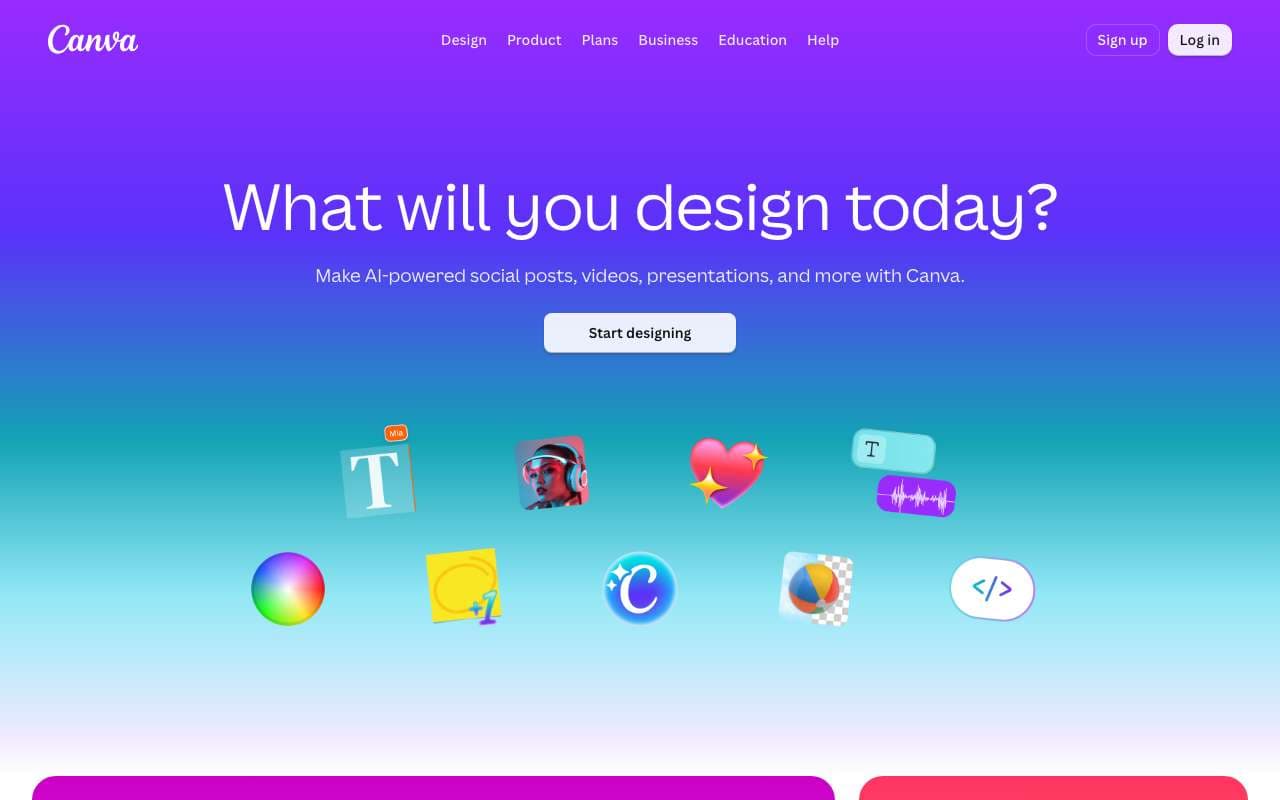
Canva AI is the suite of AI-powered design features embedded in the Canva platform, including Magic Design (generate full designs from a prompt), Magic Write (AI copywriting), Dream Lab (text-to-image), and Magic Media (text-to-video). It makes AI-assisted design accessible to non-designers by combining templates, brand kits, and generation in a single drag-and-drop interface.
Subscription-based AI image generator known for high aesthetic quality and cinematic output. The V7 architecture introduces Draft Mode for rapid iteration and character reference (--cref) for consistent character design across images. Accessed via a full web editor at midjourney.com; no longer requires Discord for core workflows.
Canva AI is the suite of AI-powered design features embedded in the Canva platform, including Magic Design (generate full designs from a prompt), Magic Write (AI copywriting), Dream Lab (text-to-image), and Magic Media (text-to-video). It makes AI-assisted design accessible to non-designers by combining templates, brand kits, and generation in a single drag-and-drop interface.
Category:AI Design & Creative
Features
Magic Design: generate complete presentations, social posts, and documents from a prompt
Dream Lab: text-to-image generation (powered by Stable Diffusion and Leonardo)
Magic Write: AI copywriting for headlines, captions, and body text
Magic Media: text-to-video (5-second clips for social use)
Background Remover: one-click subject isolation
+3 more
Pros
Lowest barrier to entry of any AI design tool — no design experience required
Bulk Create uniquely generates hundreds of personalised social posts from a single template
Magic Resize eliminates manual reformatting across 50+ social dimensions
Brand Kit integration means AI-generated content stays on-brand automatically
Cons
AI-generated designs are heavily template-dependent — output looks Canva-generic
Dream Lab image quality trails Midjourney and DALL-E 3 significantly
Magic Write output is generic marketing copy — needs substantial editing for brand voice
Magic Media video quality is below Runway, Kling, and Suno at equivalent use cases
Many AI features require Pro plan ($15/mo) or consume credits that reset monthly
Subscription-based AI image generator known for high aesthetic quality and cinematic output. The V7 architecture introduces Draft Mode for rapid iteration and character reference (--cref) for consistent character design across images. Accessed via a full web editor at midjourney.com; no longer requires Discord for core workflows.
Category:Image Generation
Features
Midjourney V7 architecture with improved photorealism and detail
Draft Mode: 10x faster low-cost iterations before full renders
Character reference (--cref) for consistent character identity across prompts
Style reference (--sref) with style codes for repeatable aesthetics
Full web editor with inpainting, outpainting, and variation controls
+3 more
Pros
V7 produces the highest aesthetic quality output among current text-to-image models for artistic styles
--cref solves the character consistency problem that made iterative storytelling difficult in V5/V6
Draft Mode reduces prompt iteration cost by ~90% compared to full renders
Web editor eliminates the Discord dependency that created friction for non-Discord users
Cons
No free tier — minimum $10/mo for 200 GPU minutes, which runs out in ~40 standard renders
Prompt engineering has a steep learning curve; parameters like --chaos, --weird, and --stylize interact unpredictably
Cannot generate accurate text within images reliably — use alternatives for image+text compositions
No API for programmatic generation at lower tiers; API requires Enterprise plan
Photorealistic human hands and teeth still require post-processing correction in many outputs
Canva AI is the suite of AI-powered design features embedded in the Canva platform, including Magic Design (generate full designs from a prompt), Magic Write (AI copywriting), Dream Lab (text-to-image), and Magic Media (text-to-video). It makes AI-assisted design accessible to non-designers by combining templates, brand kits, and generation in a single drag-and-drop interface.
Subscription-based AI image generator known for high aesthetic quality and cinematic output. The V7 architecture introduces Draft Mode for rapid iteration and character reference (--cref) for consistent character design across images. Accessed via a full web editor at midjourney.com; no longer requires Discord for core workflows.
Features
Magic Design: generate complete presentations, social posts, and documents from a prompt
Dream Lab: text-to-image generation (powered by Stable Diffusion and Leonardo)
Magic Write: AI copywriting for headlines, captions, and body text
Magic Media: text-to-video (5-second clips for social use)
Background Remover: one-click subject isolation
Magic Resize: reformat any design to all social platform dimensions
Brand Kit: enforce colours, fonts, and logos across team designs
Bulk Create: generate hundreds of personalised designs from a spreadsheet
Midjourney V7 architecture with improved photorealism and detail
Draft Mode: 10x faster low-cost iterations before full renders
Character reference (--cref) for consistent character identity across prompts
Style reference (--sref) with style codes for repeatable aesthetics
Full web editor with inpainting, outpainting, and variation controls
Vary Region tool for selective image editing without full regeneration
Turbo mode: 4x faster renders at 2x GPU cost consumption
Image weight (--iw) for precise prompt-to-reference image blending
Pros
Lowest barrier to entry of any AI design tool — no design experience required
Bulk Create uniquely generates hundreds of personalised social posts from a single template
Magic Resize eliminates manual reformatting across 50+ social dimensions
Brand Kit integration means AI-generated content stays on-brand automatically
V7 produces the highest aesthetic quality output among current text-to-image models for artistic styles
--cref solves the character consistency problem that made iterative storytelling difficult in V5/V6
Draft Mode reduces prompt iteration cost by ~90% compared to full renders
Web editor eliminates the Discord dependency that created friction for non-Discord users
Cons
AI-generated designs are heavily template-dependent — output looks Canva-generic
Dream Lab image quality trails Midjourney and DALL-E 3 significantly
Magic Write output is generic marketing copy — needs substantial editing for brand voice
Magic Media video quality is below Runway, Kling, and Suno at equivalent use cases
Many AI features require Pro plan ($15/mo) or consume credits that reset monthly
No free tier — minimum $10/mo for 200 GPU minutes, which runs out in ~40 standard renders
Prompt engineering has a steep learning curve; parameters like --chaos, --weird, and --stylize interact unpredictably
Cannot generate accurate text within images reliably — use alternatives for image+text compositions
No API for programmatic generation at lower tiers; API requires Enterprise plan
Photorealistic human hands and teeth still require post-processing correction in many outputs