No endless tables — just the differences that matter, and a clear call. Pick two tools and see who takes it.
Framer
AI Design & Creative
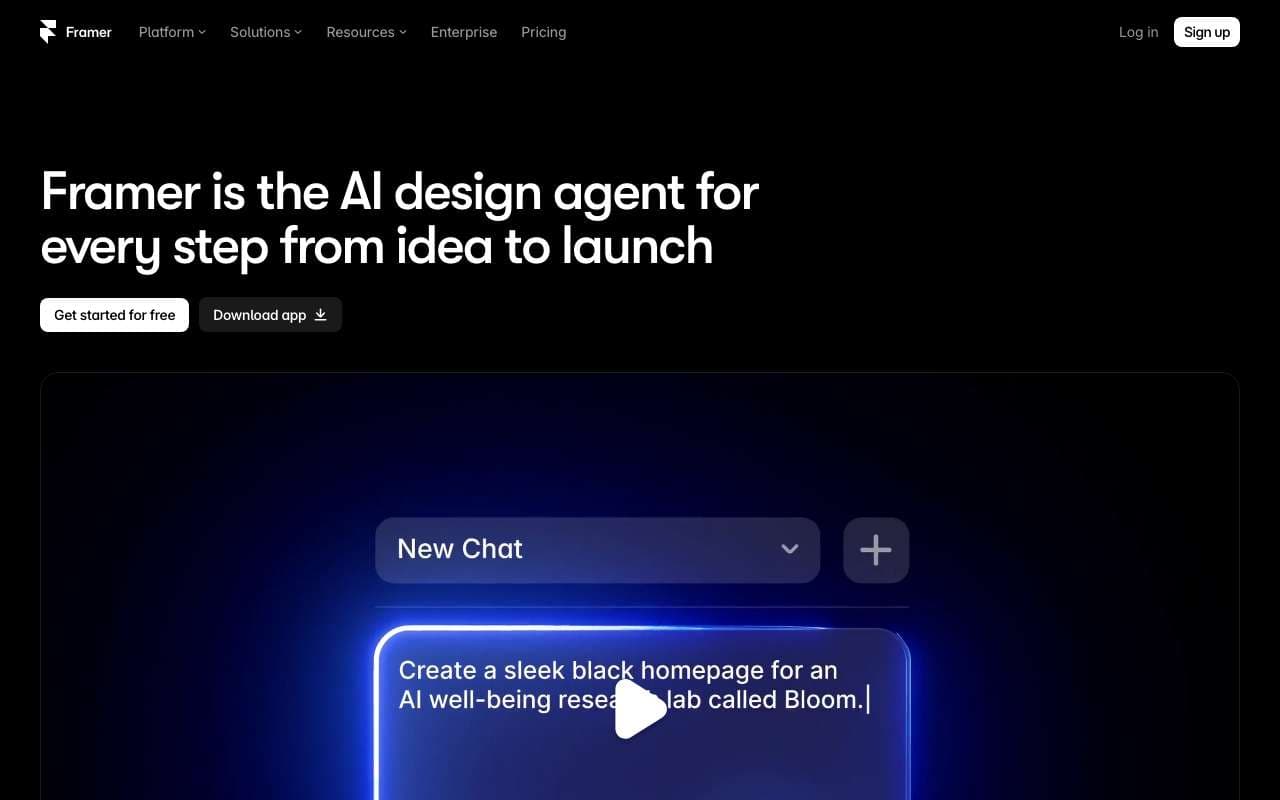
Framer is a no-code website builder with integrated AI that can generate a complete multi-page website from a single text prompt. It targets founders, designers, and marketers who need to publish production-quality websites without developers. Its AI site generation, combined with CMS and native animations, makes it one of the fastest paths from idea to live site.
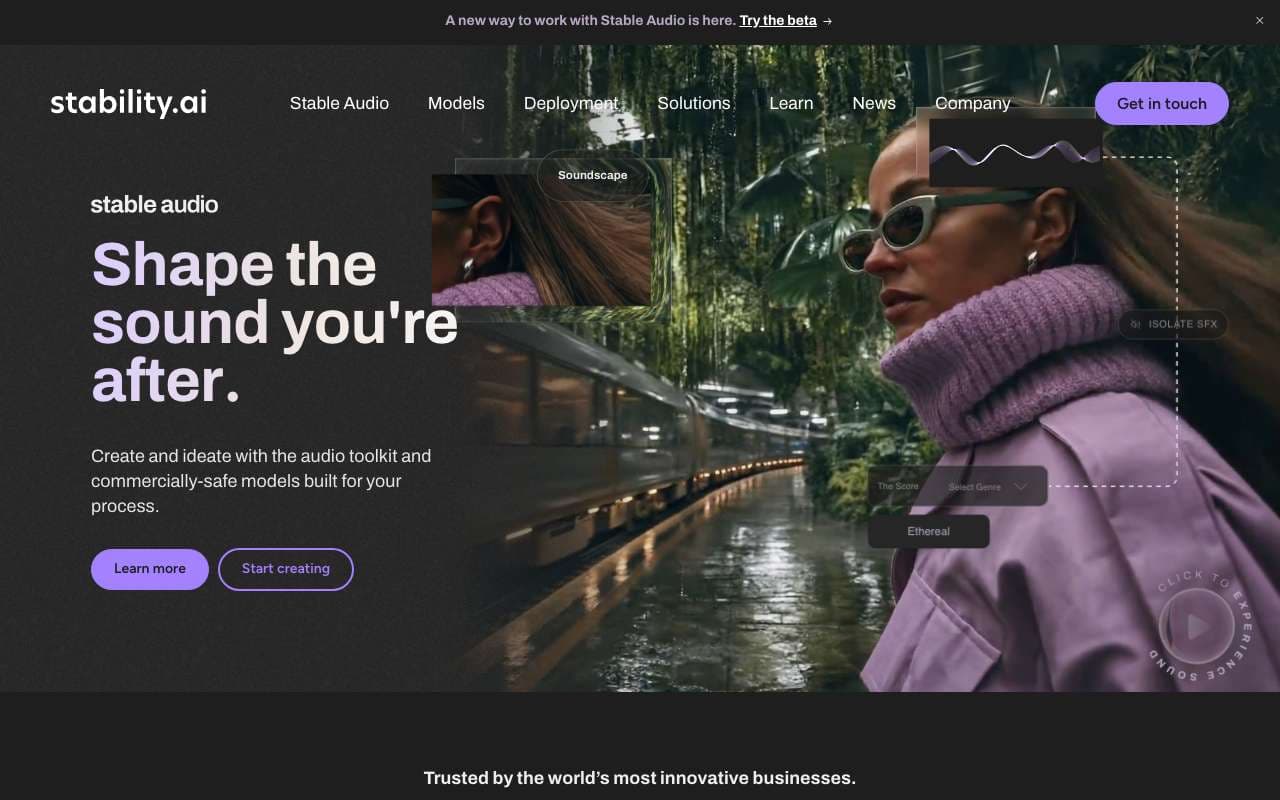
Open-source latent diffusion model for local image generation, now at SD3.5 with improved composition and text rendering. Self-hostable on consumer GPUs (8GB VRAM minimum for SD3.5 base), with an extensive ecosystem of fine-tuned models on Civitai. Stability AI underwent restructuring in 2025 after funding challenges but the open-source ecosystem remains active.
Framer is a no-code website builder with integrated AI that can generate a complete multi-page website from a single text prompt. It targets founders, designers, and marketers who need to publish production-quality websites without developers. Its AI site generation, combined with CMS and native animations, makes it one of the fastest paths from idea to live site.
Category:AI Design & Creative
Features
AI Site: generate a complete website from a text description in under 60 seconds
AI Copy: rewrite or generate page copy in brand voice
Visual canvas editor with real CSS under the hood
Built-in CMS for blogs, case studies, and dynamic pages
Native animation system without code (transitions, scroll effects)
+3 more
Pros
AI site generation produces a fully structured, publication-ready multi-page site — not a single landing page
Native CSS output means better Core Web Vitals than Webflow or Wix on most pages
Figma import makes it the most designer-friendly path from prototype to live site
Animation system is the most powerful of any no-code builder — no GreenSock required
Cons
Free plan limits publishing to a Framer subdomain (no custom domain)
AI generation quality is inconsistent for complex layouts — hero sections work well, complex grids do not
Steep learning curve compared to Squarespace or Wix — assumes design literacy
CMS is basic — not suitable for news sites or large content databases
No native e-commerce — requires third-party integration for storefronts
Open-source latent diffusion model for local image generation, now at SD3.5 with improved composition and text rendering. Self-hostable on consumer GPUs (8GB VRAM minimum for SD3.5 base), with an extensive ecosystem of fine-tuned models on Civitai. Stability AI underwent restructuring in 2025 after funding challenges but the open-source ecosystem remains active.
Category:Image Generation
Features
SD3.5 model with improved composition, anatomy, and text rendering vs SD3
SDXL (1.0) mature ecosystem with 100K+ fine-tuned models on Civitai
ComfyUI node-based pipeline for custom generation workflows
ControlNet for pose, depth, edge, and segmentation-guided generation
LoRA fine-tuning to adapt models on 20–100 images of a subject
+3 more
Pros
Zero per-image cost after hardware setup — 10,000 images costs the same as 1
Complete data privacy — all processing is local, no images sent to external servers
LoRA fine-tuning allows custom style or subject models trained in under 2 hours on a consumer GPU
ComfyUI enables production-grade automation pipelines not possible with closed SaaS tools
Cons
Setup complexity is high — ComfyUI + custom nodes + model management requires 3-5 hours for first-time users
Requires dedicated GPU hardware; RTX 3080 (10GB) recommended for SD3.5, Apple M-series works but is slower
Output quality for photorealism still trails Midjourney V7 and requires prompt tuning and model selection
Stability AI restructuring has slowed official model releases; community models fill the gap but vary in quality
Framer is a no-code website builder with integrated AI that can generate a complete multi-page website from a single text prompt. It targets founders, designers, and marketers who need to publish production-quality websites without developers. Its AI site generation, combined with CMS and native animations, makes it one of the fastest paths from idea to live site.
Open-source latent diffusion model for local image generation, now at SD3.5 with improved composition and text rendering. Self-hostable on consumer GPUs (8GB VRAM minimum for SD3.5 base), with an extensive ecosystem of fine-tuned models on Civitai. Stability AI underwent restructuring in 2025 after funding challenges but the open-source ecosystem remains active.
Features
AI Site: generate a complete website from a text description in under 60 seconds
AI Copy: rewrite or generate page copy in brand voice
Visual canvas editor with real CSS under the hood
Built-in CMS for blogs, case studies, and dynamic pages
Native animation system without code (transitions, scroll effects)
Component library with interactive React component support
Custom domain publishing with global CDN
Figma import: convert Figma frames to editable Framer components
SD3.5 model with improved composition, anatomy, and text rendering vs SD3
SDXL (1.0) mature ecosystem with 100K+ fine-tuned models on Civitai
ComfyUI node-based pipeline for custom generation workflows
ControlNet for pose, depth, edge, and segmentation-guided generation
LoRA fine-tuning to adapt models on 20–100 images of a subject
img2img mode for image-to-image transformation with strength control
Inpainting and outpainting for targeted editing
Runs locally on Windows/Mac/Linux — no cloud dependency or API costs
Pros
AI site generation produces a fully structured, publication-ready multi-page site — not a single landing page
Native CSS output means better Core Web Vitals than Webflow or Wix on most pages
Figma import makes it the most designer-friendly path from prototype to live site
Animation system is the most powerful of any no-code builder — no GreenSock required
Zero per-image cost after hardware setup — 10,000 images costs the same as 1
Complete data privacy — all processing is local, no images sent to external servers
LoRA fine-tuning allows custom style or subject models trained in under 2 hours on a consumer GPU
ComfyUI enables production-grade automation pipelines not possible with closed SaaS tools
Cons
Free plan limits publishing to a Framer subdomain (no custom domain)
AI generation quality is inconsistent for complex layouts — hero sections work well, complex grids do not
Steep learning curve compared to Squarespace or Wix — assumes design literacy
CMS is basic — not suitable for news sites or large content databases
No native e-commerce — requires third-party integration for storefronts
Setup complexity is high — ComfyUI + custom nodes + model management requires 3-5 hours for first-time users
Requires dedicated GPU hardware; RTX 3080 (10GB) recommended for SD3.5, Apple M-series works but is slower
Output quality for photorealism still trails Midjourney V7 and requires prompt tuning and model selection
Stability AI restructuring has slowed official model releases; community models fill the gap but vary in quality