No endless tables — just the differences that matter, and a clear call. Pick two tools and see who takes it.
n8n
Workflow Automation
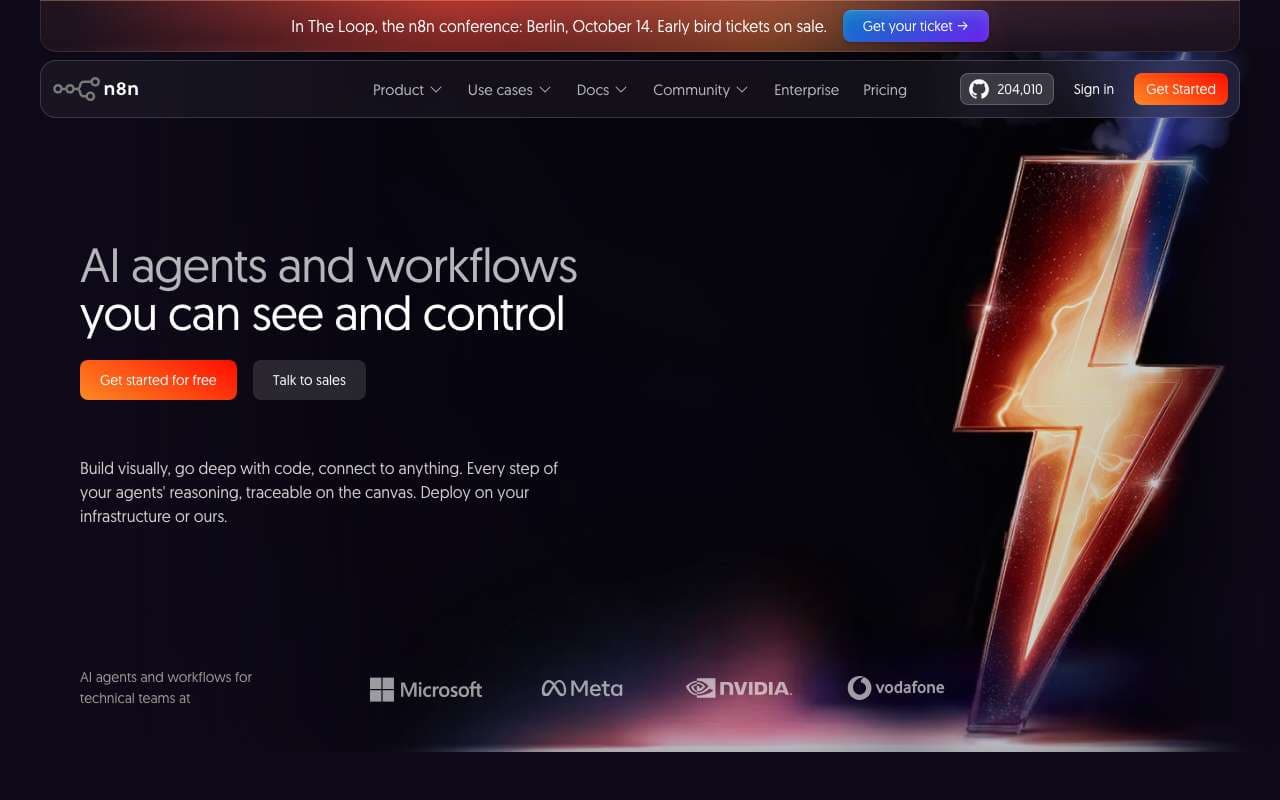
Open-source workflow automation platform under a fair-code license with the best AI/LangChain integration of any automation tool. Self-host for unlimited free executions on a $5-20/month VPS, or use managed cloud hosting. Backed by $180M Series C at a $2.5B valuation in October 2025, n8n has 70+ dedicated AI nodes for building LLM pipelines, agent workflows, and RAG systems.
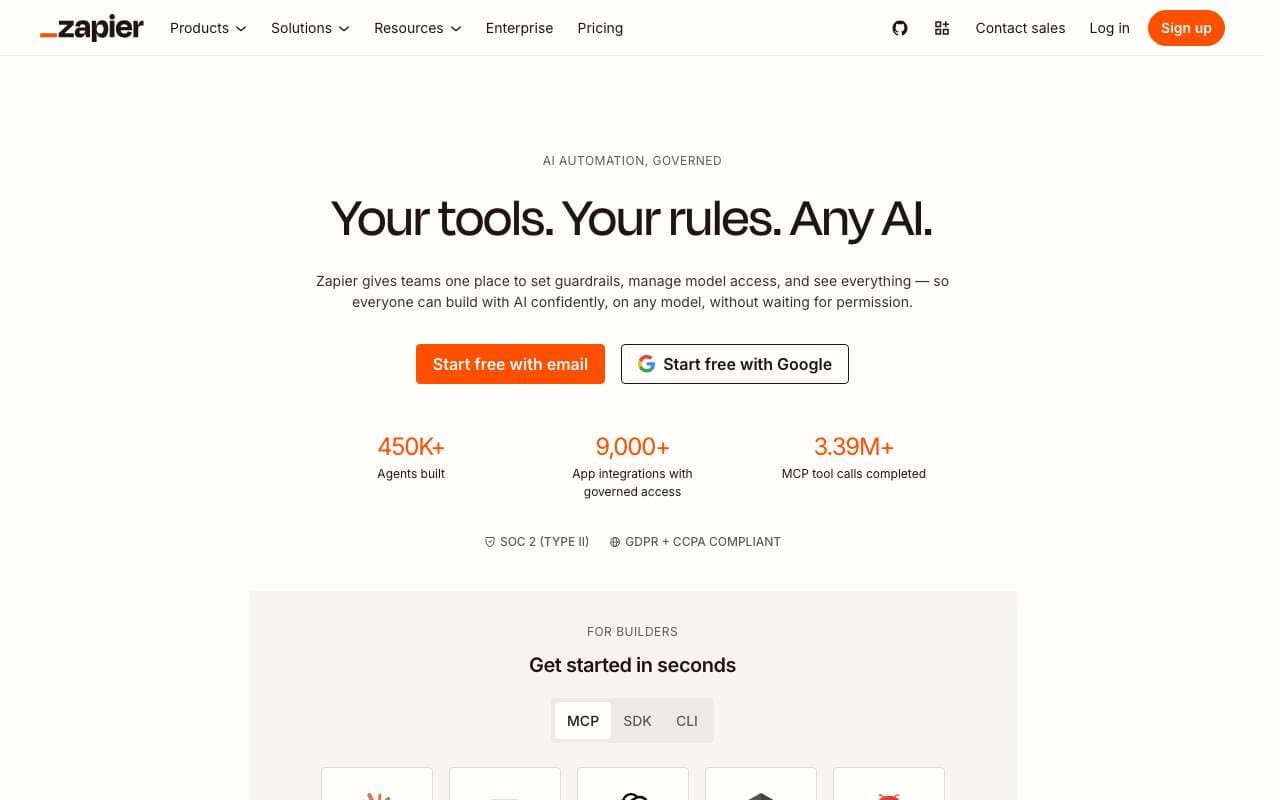
The most widely adopted no-code automation platform with 7,000+ app integrations, designed for non-technical users who need to connect tools without writing code or managing infrastructure. Linear "Zap" workflows are the easiest entry point in automation, with a free tier for simple use cases. AI features (Zapier AI Actions) allow chatbots and LLMs to trigger Zapier workflows via natural language.
Open-source workflow automation platform under a fair-code license with the best AI/LangChain integration of any automation tool. Self-host for unlimited free executions on a $5-20/month VPS, or use managed cloud hosting. Backed by $180M Series C at a $2.5B valuation in October 2025, n8n has 70+ dedicated AI nodes for building LLM pipelines, agent workflows, and RAG systems.
Category:Workflow Automation
Features
70+ AI and LangChain nodes (most AI-capable automation platform)
Self-hosted option with unlimited executions on any server or VPS
Full JavaScript and Python code execution nodes
Visual workflow builder with drag-and-drop interface
400+ integrations including HTTP request node for any REST API
+5 more
Pros
Self-hosted at ~$10-20/mo VPS cost handles 50,000+ executions — Zapier charges $1,000+ for the same volume
AI/LangChain integration depth is unmatched — build complete RAG pipelines and multi-agent workflows visually
Fair-code license means you own your automation data and workflow code, no vendor lock-in
Full JavaScript execution node allows logic that no other automation tool can handle without code
Cons
Steepest learning curve of the three major automation platforms — expect 5-10 hours to build your first complex workflow
Self-hosting requires Docker knowledge and ongoing maintenance (updates, backups, monitoring)
Documentation has gaps for advanced edge cases and newer AI nodes; community forum is the primary resource
Cloud pricing ($20-100/mo) is less competitive than self-hosting; only justified if DevOps resources are scarce
The most widely adopted no-code automation platform with 7,000+ app integrations, designed for non-technical users who need to connect tools without writing code or managing infrastructure. Linear "Zap" workflows are the easiest entry point in automation, with a free tier for simple use cases. AI features (Zapier AI Actions) allow chatbots and LLMs to trigger Zapier workflows via natural language.
Category:Workflow Automation
Features
7,000+ app integrations — largest integration catalog of any automation platform
Zap builder: single-trigger linear workflow with filter, delay, and path steps
Paths: conditional branching for up to 3 branches per Zap
AI Actions: allow ChatGPT, Claude, and other LLMs to trigger Zapier workflows via natural language
Tables: built-in database for data storage between Zaps
+3 more
Pros
7,000+ integrations means almost any SaaS app the user works with is already supported, no HTTP setup required
Easiest UI of the three major platforms — non-technical staff can build and maintain their own automations
AI Actions enables AI assistants to take real-world actions (create CRM contacts, send emails) without a developer
Free tier with 100 tasks/month is sufficient for light personal automation use without a credit card
Cons
Most expensive at scale: 10,000 tasks/mo costs $69+/mo versus n8n self-hosted for ~$15/mo total
Linear Zap model limits complex multi-branch logic; "Paths" only supports 3 branches per Zap
Free tier (100 tasks/month) is too low for any meaningful business process — forces upgrade quickly
No self-hosting option — all workflow data flows through Zapier's US-based cloud infrastructure
Slower execution (polling triggers check every 1-15 min on free/lower plans) versus instant webhook triggers on paid plans
Open-source workflow automation platform under a fair-code license with the best AI/LangChain integration of any automation tool. Self-host for unlimited free executions on a $5-20/month VPS, or use managed cloud hosting. Backed by $180M Series C at a $2.5B valuation in October 2025, n8n has 70+ dedicated AI nodes for building LLM pipelines, agent workflows, and RAG systems.
The most widely adopted no-code automation platform with 7,000+ app integrations, designed for non-technical users who need to connect tools without writing code or managing infrastructure. Linear "Zap" workflows are the easiest entry point in automation, with a free tier for simple use cases. AI features (Zapier AI Actions) allow chatbots and LLMs to trigger Zapier workflows via natural language.
Features
70+ AI and LangChain nodes (most AI-capable automation platform)
Self-hosted option with unlimited executions on any server or VPS
Full JavaScript and Python code execution nodes
Visual workflow builder with drag-and-drop interface
400+ integrations including HTTP request node for any REST API
Fair-code license — modify, self-host, and distribute without vendor lock-in
Docker and Kubernetes deployment with official Helm charts
AI agent nodes: chain LLMs, memory, tools, and data sources visually
Webhook triggers, cron schedulers, and 50+ event-based triggers
Enterprise SSO, RBAC, and audit logs on hosted plans
7,000+ app integrations — largest integration catalog of any automation platform
Zap builder: single-trigger linear workflow with filter, delay, and path steps
Paths: conditional branching for up to 3 branches per Zap
AI Actions: allow ChatGPT, Claude, and other LLMs to trigger Zapier workflows via natural language
Tables: built-in database for data storage between Zaps
Interfaces: no-code forms and portals that trigger Zaps
Zapier Central: AI bot creation with workflow triggers connected to 7,000+ apps
Sub-Zaps: modular reusable workflow blocks called from multiple Zaps
Pros
Self-hosted at ~$10-20/mo VPS cost handles 50,000+ executions — Zapier charges $1,000+ for the same volume
AI/LangChain integration depth is unmatched — build complete RAG pipelines and multi-agent workflows visually
Fair-code license means you own your automation data and workflow code, no vendor lock-in
Full JavaScript execution node allows logic that no other automation tool can handle without code
7,000+ integrations means almost any SaaS app the user works with is already supported, no HTTP setup required
Easiest UI of the three major platforms — non-technical staff can build and maintain their own automations
AI Actions enables AI assistants to take real-world actions (create CRM contacts, send emails) without a developer
Free tier with 100 tasks/month is sufficient for light personal automation use without a credit card
Cons
Steepest learning curve of the three major automation platforms — expect 5-10 hours to build your first complex workflow
Self-hosting requires Docker knowledge and ongoing maintenance (updates, backups, monitoring)
Documentation has gaps for advanced edge cases and newer AI nodes; community forum is the primary resource
Cloud pricing ($20-100/mo) is less competitive than self-hosting; only justified if DevOps resources are scarce
Most expensive at scale: 10,000 tasks/mo costs $69+/mo versus n8n self-hosted for ~$15/mo total
Linear Zap model limits complex multi-branch logic; "Paths" only supports 3 branches per Zap
Free tier (100 tasks/month) is too low for any meaningful business process — forces upgrade quickly
No self-hosting option — all workflow data flows through Zapier's US-based cloud infrastructure
Slower execution (polling triggers check every 1-15 min on free/lower plans) versus instant webhook triggers on paid plans