No endless tables — just the differences that matter, and a clear call. Pick two tools and see who takes it.
Gemini
AI Assistants
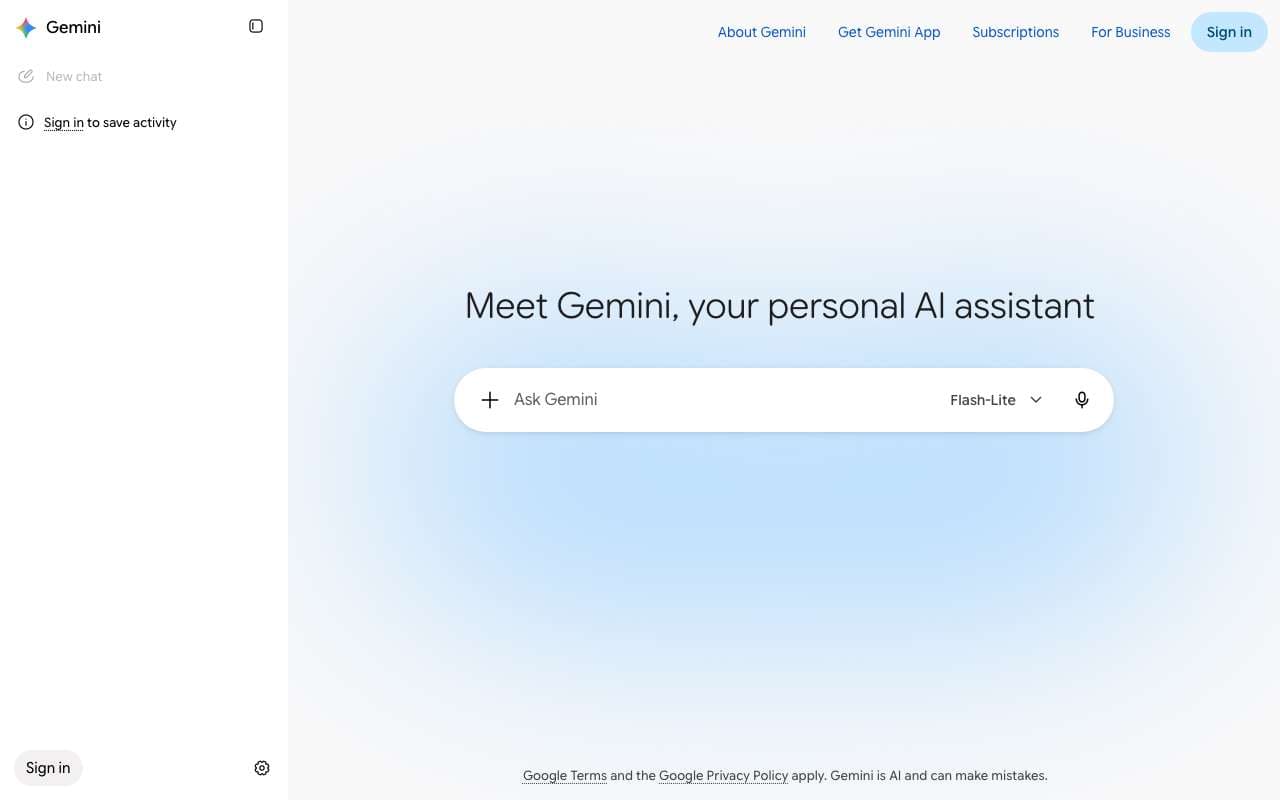
Google's multimodal AI assistant built on the Gemini 3.1 architecture, notable for deep Google Workspace integration and 77.1% on the ARC-AGI-2 benchmark. Available across free, AI Pro ($20/mo), and Ultra ($250/mo) tiers with progressively larger context and model access. Strongest competitor to ChatGPT for users already in the Google ecosystem.
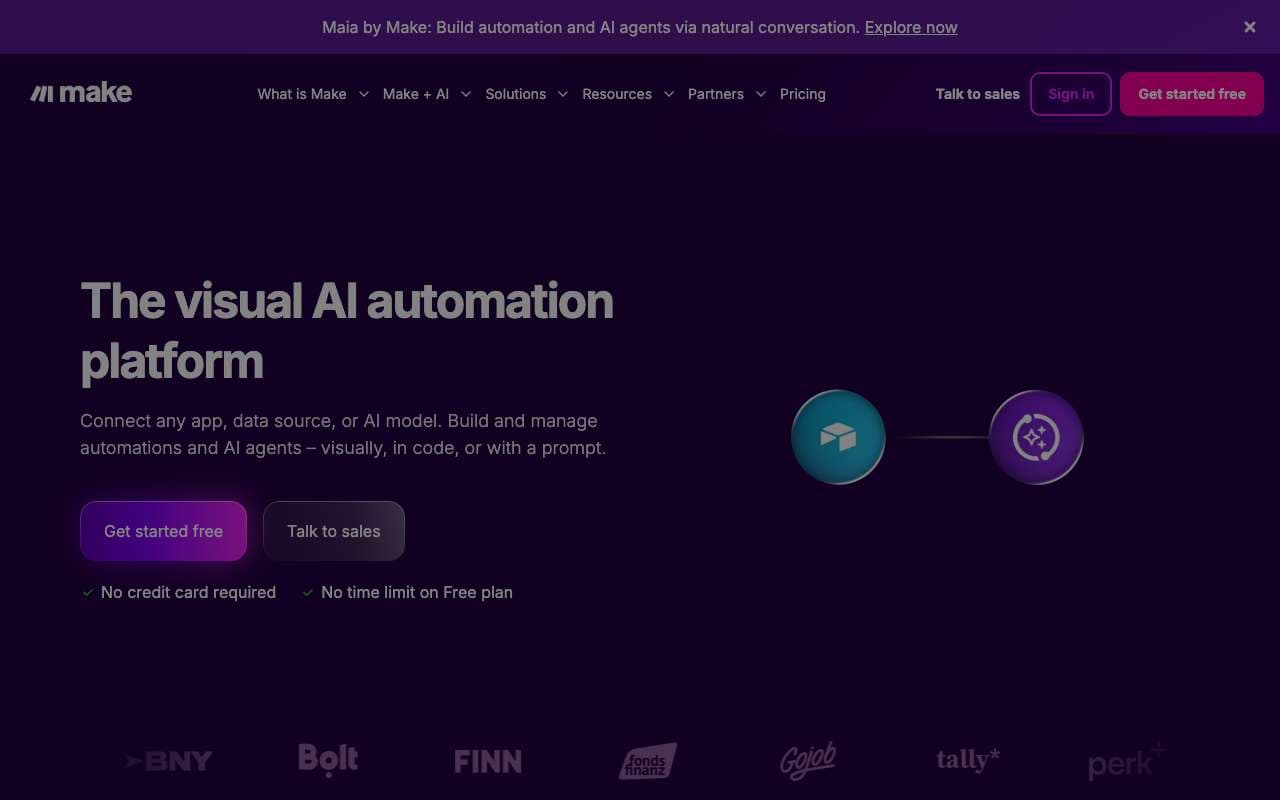
Visual automation platform (formerly Integromat) known for a scenario builder that makes data transformation and routing logic easier to visualize than Zapier's linear flow model. At $9-16/mo for 10,000-40,000 operations, it sits between free tools and enterprise platforms. Strong for teams doing complex multi-branch data processing without writing code.
Google's multimodal AI assistant built on the Gemini 3.1 architecture, notable for deep Google Workspace integration and 77.1% on the ARC-AGI-2 benchmark. Available across free, AI Pro ($20/mo), and Ultra ($250/mo) tiers with progressively larger context and model access. Strongest competitor to ChatGPT for users already in the Google ecosystem.
Category:AI Assistants
Features
Gemini 3.1 Pro model with multimodal input (text, image, audio, video)
77.1% score on ARC-AGI-2 abstract reasoning benchmark
Deep integration with Gmail, Docs, Sheets, Drive, and Meet
NotebookLM integration for research with source citations
Google Search grounding for real-time factual responses
+3 more
Pros
Google Search grounding provides current information without hallucination risk of pure model outputs
Native Google Workspace integration means no copy-pasting between tools for Docs/Sheets users
ARC-AGI-2 score of 77.1% leads all commercial models on abstract reasoning tasks
NotebookLM included in AI Pro tier provides citation-backed research at no extra cost
Cons
AI Ultra at $250/mo is 12.5x the price of Pro with modest real-world gains for most use cases
Gemini 3.1 Ultra access is gated to Ultra tier; Pro users get 3.1 Pro which lags on creative tasks
Google Workspace integration requires organizational admin approval, blocking individual use in enterprise
Voice mode is less natural than ChatGPT's real-time voice in head-to-head comparisons
Data privacy terms differ from ChatGPT; free tier data may be used for model training by default
Visual automation platform (formerly Integromat) known for a scenario builder that makes data transformation and routing logic easier to visualize than Zapier's linear flow model. At $9-16/mo for 10,000-40,000 operations, it sits between free tools and enterprise platforms. Strong for teams doing complex multi-branch data processing without writing code.
Category:Workflow Automation
Features
Visual scenario builder with non-linear, branching workflow visualization
2,000+ app integrations including HTTP/REST and webhooks for custom APIs
Advanced router modules for conditional branching and data filtering
Data store: built-in lightweight database for state persistence between scenarios
JSON/XML parsing and transformation with no-code tools
+3 more
Pros
Non-linear visual builder is significantly clearer than Zapier for workflows with multiple branches and conditions
Operations-based pricing means 1 automation with 5 steps costs 5 ops — often cheaper than per-task Zapier pricing
Data Store allows state to persist between runs without an external database for simple key-value use cases
Free tier includes 1,000 operations/month — enough for testing before committing to a paid plan
Cons
AI node support is limited compared to n8n — building LLM pipelines requires more manual HTTP module work
Scenario builder becomes visually complex (hard to read) on workflows with 30+ modules
Free tier requires manual scenario activation — paid plan required for scheduled automatic runs
No self-hosting option — all data flows through Make's cloud infrastructure
Cost scales linearly with operation count, not workflow count; high-frequency scenarios become expensive at $9/mo base
Google's multimodal AI assistant built on the Gemini 3.1 architecture, notable for deep Google Workspace integration and 77.1% on the ARC-AGI-2 benchmark. Available across free, AI Pro ($20/mo), and Ultra ($250/mo) tiers with progressively larger context and model access. Strongest competitor to ChatGPT for users already in the Google ecosystem.
Visual automation platform (formerly Integromat) known for a scenario builder that makes data transformation and routing logic easier to visualize than Zapier's linear flow model. At $9-16/mo for 10,000-40,000 operations, it sits between free tools and enterprise platforms. Strong for teams doing complex multi-branch data processing without writing code.
Features
Gemini 3.1 Pro model with multimodal input (text, image, audio, video)
77.1% score on ARC-AGI-2 abstract reasoning benchmark
Deep integration with Gmail, Docs, Sheets, Drive, and Meet
NotebookLM integration for research with source citations
Google Search grounding for real-time factual responses
Code execution sandbox for Python data analysis
AI Ultra tier with access to Gemini 3.1 Ultra model
Gemini API with 2M token context for developers
Visual scenario builder with non-linear, branching workflow visualization
2,000+ app integrations including HTTP/REST and webhooks for custom APIs
Advanced router modules for conditional branching and data filtering
Data store: built-in lightweight database for state persistence between scenarios
JSON/XML parsing and transformation with no-code tools
Scenario scheduling: minute-level granularity on triggers
Error handling routes for automatic retry and failure notification
Team features: shared scenarios, scenario logs, version history
Pros
Google Search grounding provides current information without hallucination risk of pure model outputs
Native Google Workspace integration means no copy-pasting between tools for Docs/Sheets users
ARC-AGI-2 score of 77.1% leads all commercial models on abstract reasoning tasks
NotebookLM included in AI Pro tier provides citation-backed research at no extra cost
Non-linear visual builder is significantly clearer than Zapier for workflows with multiple branches and conditions
Operations-based pricing means 1 automation with 5 steps costs 5 ops — often cheaper than per-task Zapier pricing
Data Store allows state to persist between runs without an external database for simple key-value use cases
Free tier includes 1,000 operations/month — enough for testing before committing to a paid plan
Cons
AI Ultra at $250/mo is 12.5x the price of Pro with modest real-world gains for most use cases
Gemini 3.1 Ultra access is gated to Ultra tier; Pro users get 3.1 Pro which lags on creative tasks
Google Workspace integration requires organizational admin approval, blocking individual use in enterprise
Voice mode is less natural than ChatGPT's real-time voice in head-to-head comparisons
Data privacy terms differ from ChatGPT; free tier data may be used for model training by default
AI node support is limited compared to n8n — building LLM pipelines requires more manual HTTP module work
Scenario builder becomes visually complex (hard to read) on workflows with 30+ modules
Free tier requires manual scenario activation — paid plan required for scheduled automatic runs
No self-hosting option — all data flows through Make's cloud infrastructure
Cost scales linearly with operation count, not workflow count; high-frequency scenarios become expensive at $9/mo base